

About Musica Britannica
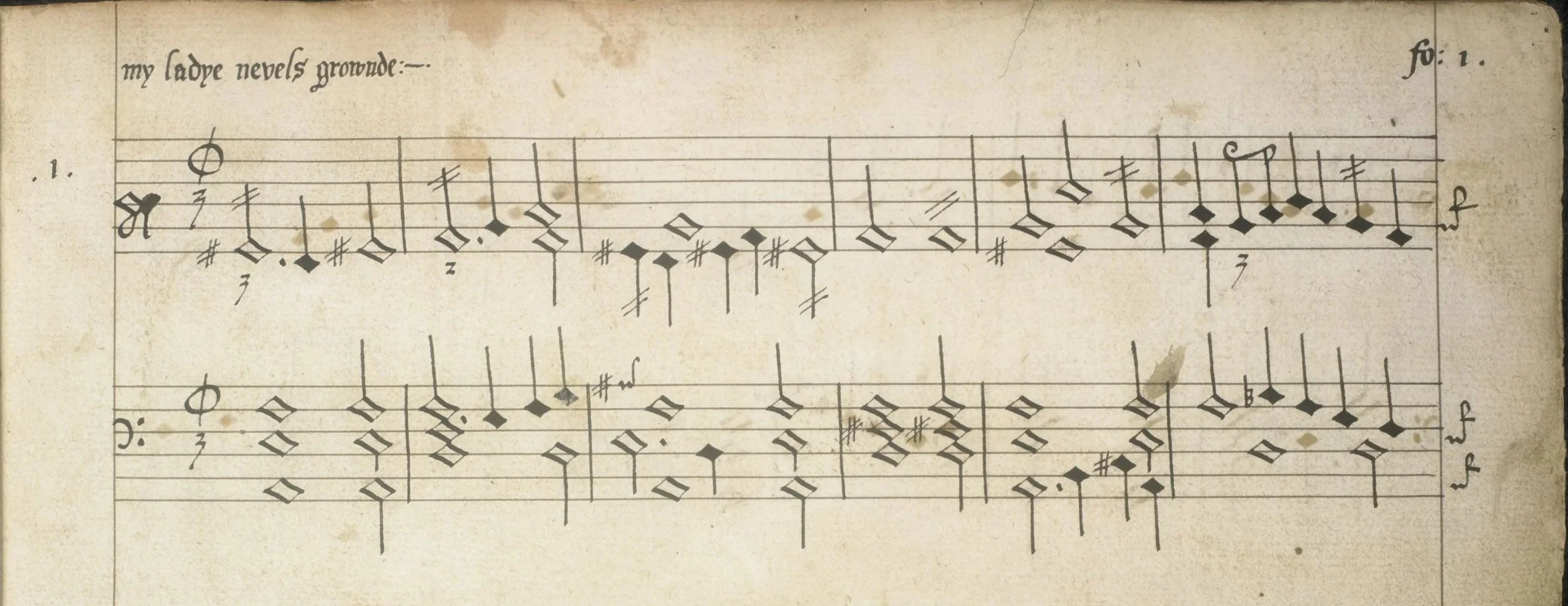
Opening of ‘My Ladye Nevels Grounde’ from My Ladye Nevell’s Book. British Library, MS Mus. 1591, fol 1r.
In 1948 the Royal Musical Association in Britain began to plan the creation of a new monumental edition: Musica Britannica (MB). The intention was to address the absence of any kind of authoritative national collection of British music equivalent to those that had existed in many European countries since the mid–late 19th century. The first three volumes were published by Stainer & Bell in 1951, timed to coincide with the Festival of Britain.
The initial plan was to use a small grant from the Arts Council to produce just 10–12 volumes, but subscriptions allowed production of editions to continue, with MB becoming an independent charity in 1976. In 2026 MB celebrates its 75th anniversary, with over 110 volumes now published.
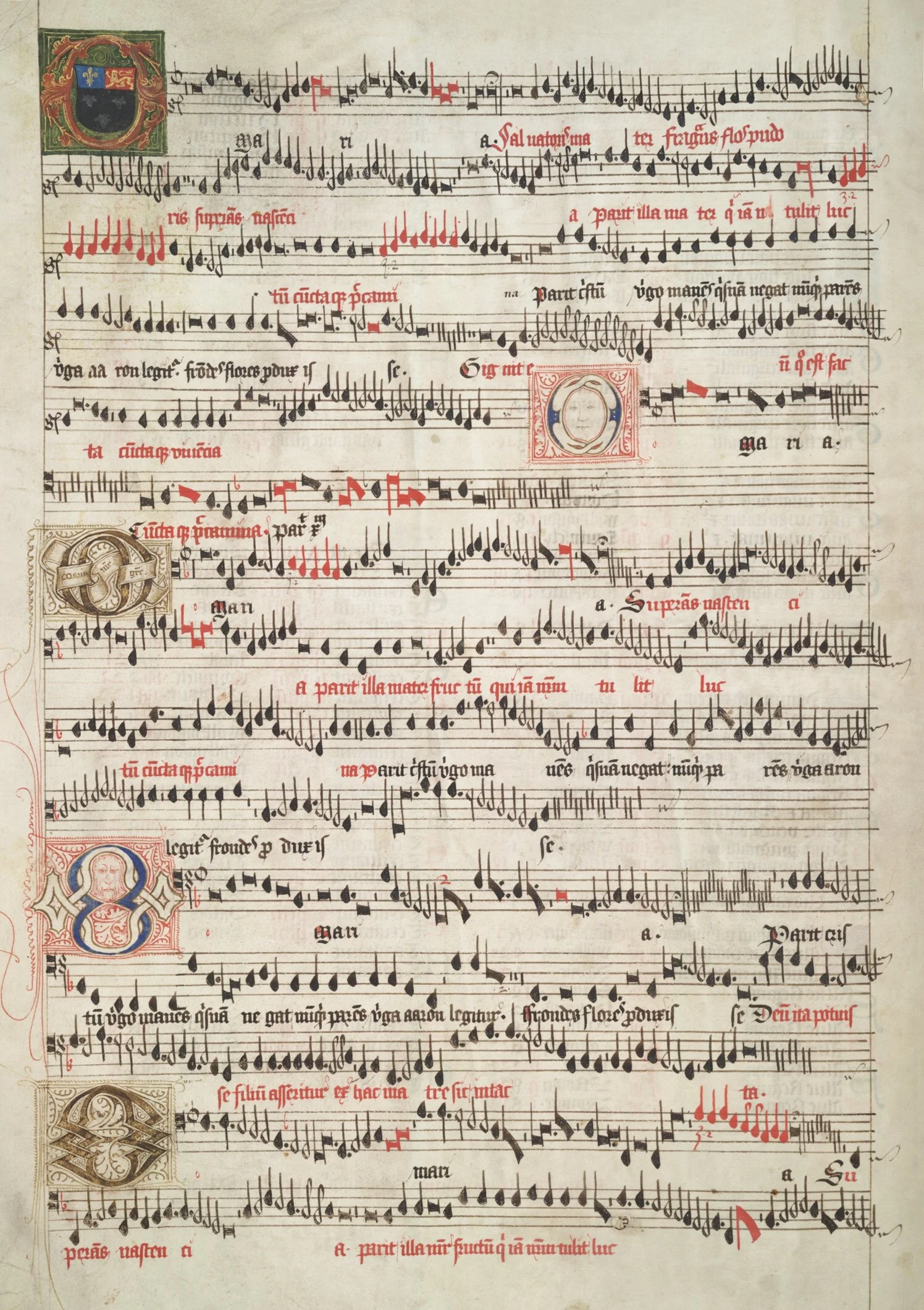
Opening of John Browne, O Maria salvatoris mater from the Eton Choirbook. Eton College Library, ML 178, fol. 1v.
Published Volumes
The repertory published in Musica Britannica ranges from Medieval songs, carols and secular polyphony to late-Victorian operettas, and early 20th-century songs and orchestral works. It includes:
Editions of important sources, including:
The Mulliner Book
The Eton Choirbook
The Fitzwilliam Virginal Book
The complete works of John Dunstable
Collections of selected genres of music by other major British composers, such as:
The keyboard music of John Bull, William Byrd and Maurice Greene
Consort music by John Jenkins and Matthew Locke
Anthems by John Blow and Samuel Sebastian Wesley
Major individual works of composers including:
John Eccles (Semele)
Thomas Arne (The Masque of Comus, The Judgment of Paris, Alfred and Judith)
William Shield (Rosina)
William Boyce (Solomon)
Stephen Storace (No Song, No Supper and Gli Equivoci)
Genre-based anthologies, such as:
English keyboard concertos from 1740–1815
Two volumes of 19th-century song
Collections of more popular repertory such as 18th-century psalmody and the Savoy curtain-raisers
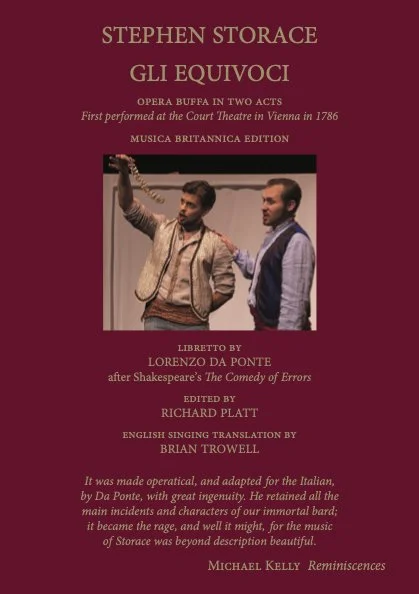
Brochure for Stephen Storace, Gli Equivoci, MB86.
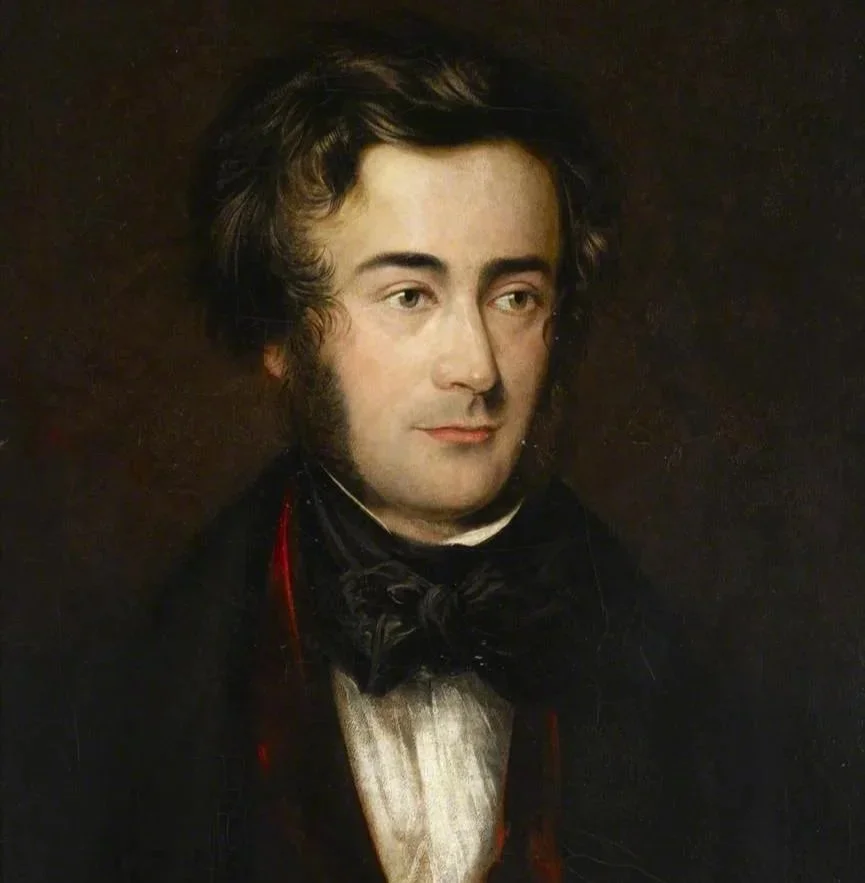
Samuel Sebastian Wesley, c.1831-1839. Reproduced by permission of the Royal College of Music, PPHC000106.
Subscriber Benefits
Subscribers to Musica Britannica receive each new addition to the series as a high-quality, hard-bound folio volume produced by our publisher, Stainer & Bell. Volumes can also be purchased in this format individually, and Stainer & Bell additionally produces performing parts for all relevant volumes, as well as offprints of individual items from within many volumes, usually available in either print or digital (pdf) format from their website. The Editorial Committee is keen to facilitate flexible access to the edition by both performers and scholars and is actively pursuing a policy of digitization to make its past volumes available electronically.
Further Reading
More details on the history of Musica Britannica can be found in the following publications:
Anthony Lewis, ‘Musica Britannica’, The Musical Times, 92/1299 (May 1951), 201–5.
Julian Rushton, ‘Voice of Britain’, The Musical Times, 136/1831 (September 1995), 472–4.
Julian Rushton, ‘100 Volumes of Musica Britannica’, Early Music, 45 (2017), 311–12.
Julian Rushton, ‘Musica Britannica and the Eighteenth Century’, in British Music, Musicians and Institutions, c. 1630–1800: Essays in Honour of Harry Diack Johnstone, ed. Peter Lynan and Julian Rushton (Woodbridge: Boydell and Brewer, 2022), 263–74.
Rebecca Herissone, ‘Monumental Challenges for Musica Britannica: Addressing the Mismatch between the Scholarly Edition and Performer Priorities’, in Andrea Puentes-Blanco et al, ‘The Monumental Edition in the Digital Age: Creating a Sustainable Future’, Journal of New Music Research, 53 (2024), 312–24 at 315–17.